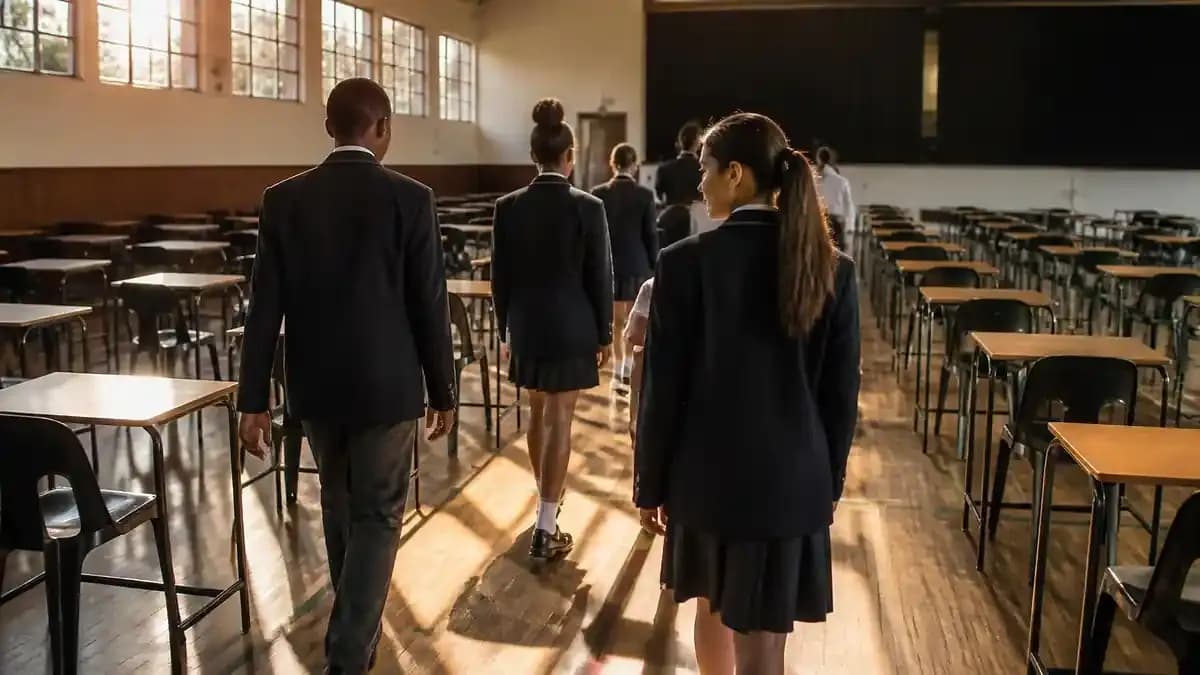
The matric exams 2026 are officially under way. The first paper, Computer Applications Technology (CAT) Paper 1, was written on Tuesday, 13 October, and the final papers are scheduled for 26 November, according to SAnews.
This is the biggest matric class South Africa has ever had. If you’re writing this year, or you’re the parent keeping the snacks coming, here’s what you need to know: the numbers, the backup plan if protests break out, the new anti-cheating checks, and what happens after your last paper.
The 2026 NSC exams at a glance
What | Detail |
Exams start | 13 October 2026 (CAT Paper 1) |
Exams end | 26 November 2026 |
Candidates (DBE public exams) | 962,832 |
Full-time candidates | 815,051 (up 48,508 on 2025) |
Part-time candidates | 147,781 |
Exam centres | About 7,100 |
Markers | 51,104 at 189 marking centres |
Source: SAnews, 11 October 2026
How big is the Class of 2026?
The Department of Basic Education (DBE) has registered a record 962,832 candidates for the National Senior Certificate (NSC) exams. The NSC is the official name for matric.
Of these, 815,051 are full-time learners, which is 48,508 more than last year. Basic Education Minister Siviwe Gwarube said this is the largest full-time group ever to write the NSC.
The other 147,781 are part-time candidates. That group includes people going back to improve their results. If that’s you, you’re far from alone.
Good to know: You may see a figure of about 1.08 million candidates in other reports. That number comes from Umalusi, the body that checks the quality of exams, and it counts more than the DBE’s NSC exams. It also includes the independent exam boards (IEB and SACAI), adult education exams and TVET college exams. Both numbers are correct. They just measure different things.
Is the system ready? What Umalusi says
Umalusi audited the exam system from 24 August to 30 September 2026. Its CEO, Dr Mafu Rakometsi, said the system is broadly ready to run this year’s exams.
Umalusi did find some problems. Rakometsi said these are “not systemic” and don’t threaten the credibility of the exams. The exam bodies were told to fix them before writing started.
One issue to watch is marking. The DBE reported a shortage of markers for Afrikaans Home Language, English Home Language and History. Umalusi says the department’s plan to start marking early, in phases, should handle it, and it will keep monitoring.
What happens if protests disrupt the exams?
The exams started during anti-migrant protests in KwaZulu-Natal and Gauteng, which raised fears that some learners might not get to their exam centres.
The DBE says contingency plans are in place. Priscilla Ogunbanjo, chief director for national examinations, told eNCA that learners will be allowed to write at any exam centre if something goes wrong, and that trained officials are on standby.
In plain terms: if you can’t reach your usual school because of unrest, don’t stay home. Go to the nearest exam centre you can safely reach and tell the officials who you are.
The Minister has also asked communities not to bring protests to schools during the exams.
Gauteng brings in scanners to catch cheating
Gauteng has its biggest matric group ever, with 203,794 candidates writing at 1,065 centres, SABC News reports.
To stop high-tech cheating, the province is placing “super scanners” at exam room entrances. Gauteng Education MEC Lebogang Maile said they are there to find hidden devices such as smart glasses, spy pens and tiny earpieces, not to invade learners’ privacy.
The penalties are serious. TimesLive reports that learners caught cheating in Gauteng could be barred from writing for up to three exam cycles. Nationally, the DBE says it has a zero-tolerance approach to cheating and runs a 24-hour hotline for reporting it.
The simple rule: leave your phone, smartwatch and earbuds outside the exam room.
Western Cape: about 85,000 candidates
In the Western Cape, Education Minister Jaco Londt confirmed that 71,302 full-time and 13,834 part-time and repeat candidates are writing, IOL reports. That’s about 85,000 in total. The province achieved an 88.2% pass rate in 2025 and hopes to improve on it.
Things to keep in mind
- The timetable is long. You’ll be writing for about six weeks. Plan rest days as carefully as study days.
- The pressure is real. The Minister has acknowledged that this class had its schooling disrupted by COVID-19. If you’re struggling, speak to a teacher or someone you trust early.
- Marking shortages in three subjects could put pressure on the marking process. Umalusi says it’s being managed.
When will the 2026 matric results come out?
The national release date has not been announced yet (follow our matric results release date update for the latest). Gauteng’s education department has said it is working towards 12 January 2027. Keep an eye on the DBE’s NSC results page for the confirmed date.
For context, the Class of 2025 achieved a national pass rate of 88%.
What to do next
- Check your timetable every week. The DBE asks every candidate to confirm dates, times and subjects on the official timetable from their school. Had a bad paper already? Read what happens now.
- Line up your options now, not in January. Browse universities and TVET colleges so you have a plan A and a plan B.
- Sort out funding early. Our NSFAS guide explains who qualifies and how to apply.
- Still deciding what to study? Start with our guide to choosing a career path, or look at distance learning options if you plan to work and study.
- Plan open-day visits for after your last paper on our events page.
Frequently asked questions
When do the 2026 matric exams start and end?
The 2026 National Senior Certificate exams started on 13 October 2026 with Computer Applications Technology Paper 1. The DBE says the exam period ends on 26 November 2026. Always confirm your own paper dates on the official timetable from your school.
How many learners are writing matric in 2026?
The DBE has registered 962,832 candidates for the 2026 NSC exams. That includes a record 815,051 full-time learners and 147,781 part-time candidates. Umalusi’s figure of about 1.08 million is higher because it also counts the independent exam boards, TVET and adult education exams.
What happens if I can’t get to my exam centre because of protests?
The DBE says learners will be allowed to write at any exam centre if disruptions happen, and trained officials are on standby. If unrest blocks your route, go to the nearest exam centre you can safely reach and explain your situation to the officials there.
What are the “super scanners” in Gauteng?
They are scanners placed at exam room entrances in Gauteng to find hidden electronic devices, such as smart glasses, spy pens and small earpieces. The province says they protect the fairness of the exams. Learners caught cheating risk losing their results or being barred from future exam sittings.
When will the 2026 matric results be released?
The national date has not been confirmed yet. Gauteng’s education department has said it is working towards 12 January 2027. Check the DBE’s official NSC results page or ask your school for the confirmed release date.
Can adults write the matric exams?
Yes. Of the 2026 candidates, 147,781 are part-time, including people improving earlier results. The DBE’s Second Chance Matric Programme supports part-time candidates with after-hours and weekend classes at 41 centres. Ask your provincial education department how to register for the next sitting.
Sources
Official
- SAnews: Nearly one million candidates registered for 2026 matric exams (11 October 2026)
- SAnews: Matrics pledge integrity as national exams begin on Tuesday (11 October 2026)
- SAnews: Umalusi confirms readiness for final exams (8 October 2026)
- SAnews: Matric exams get underway (13 October 2026)
- DBE: Release of NSC examination results
Media
- eNCA: Matric exams: Contingency plans in place amid protest fears (12 October 2026)
- SABC News: Gauteng Education deploys super scanners to curb matric exam cheating (12 October 2026)
- TimesLive: Gauteng matric cheaters risk three exam bans (12 October 2026)
- IOL Cape Argus: Western Cape’s 85 000 matric candidates begin 2026 exams (13 October 2026)
- Inside Education: Gauteng registers more than 203,000 candidates (12 October 2026)