Career profile · Trades
Electrician
Career summary
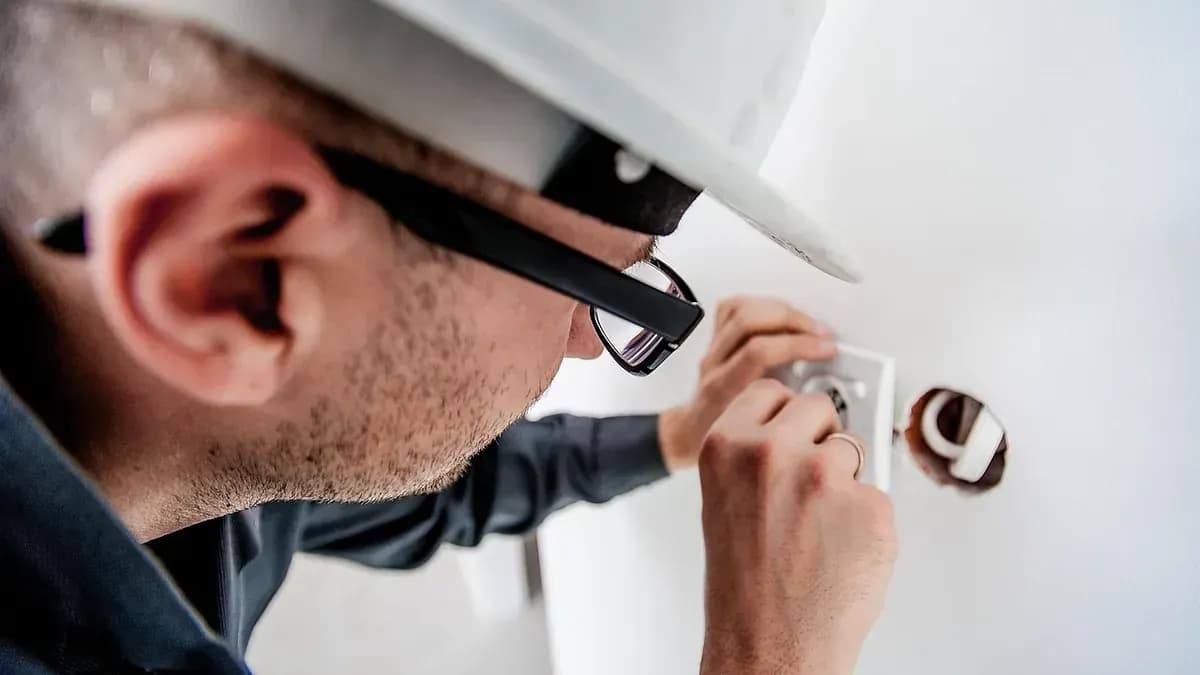
Electricians wire new buildings, fix faults, and make sure electricity is safe to use. In South Africa, loadshedding has made this trade even more in demand — people need generators, inverters and solar systems installed and maintained, on top of normal electrical work.
Most electricians train through an apprenticeship or a TVET college N-course, then pass a trade test to earn their "Red Seal" — the official proof they're qualified. After that, extra exams and a separate registration let you legally sign off electrical work as safe.
It's physical work — climbing roofs, working in tight ceiling spaces, and sometimes being called out at night for power emergencies. But it pays off: steady work, a skill you can take anywhere in SA, and a real path to running your own electrical business one day.
A Day in the Life
A qualified electrician's day mixes hands-on wiring work with safety checks, paperwork, and — increasingly in South Africa — solving problems caused by loadshedding and backup power systems.
07:00
Load the van and check the job list — Checks tools, stock and today's work orders before driving to the first site — timing matters because most jobs need daylight and client access.
07:30
Residential wiring or fault-finding — Inspects wiring for safety, installs plugs and lights, or traces why a circuit keeps tripping — often in a roof space or under a floor.
10:00
Commercial or industrial site work — Installs new circuits in a shop or factory, or does planned maintenance on machinery, working to the SANS 10142 wiring code.
12:30
Quick lunch, more calls come in — Checks messages — a client with no power, a burnt plug point, or a solar/inverter installer asking for a sign-off.
13:30
Client consult and quoting — Walks a homeowner or business through what's wrong, what it will cost, and how long repairs will take.
15:00
Emergency callout — Responds to a power outage or a burning smell — this is where the job can suddenly become urgent and unpredictable.
16:30
Testing and sign-off — Tests that finished work is safe, then issues or updates a Certificate of Compliance if registered to do so.
17:00
Pack up and report back — Cleans the site, accounts for tools and stock, and writes up the job report before heading home or to standby.
Choose this career if…
- You are okay with heights or tight spaces
- You are steady with your hands
- You like working a problem out logically
- You are physically tough
- You are fine working nights, weekends and public holidays
- You do what you said you would do
- You are comfortable with numbers
Qualification
- 3years
Occupational Certificate: Electrician
The standard route: an employer- or SETA-linked apprenticeship/learnership combining theory, practical training and workplace experience, ending in a trade test. Offered via TVET colleges and merSETA/EWSETA-linked employers. Note: SAQA's entry requirement names 'Mathematics and Science' at NQF Level 1 (roughly Grade 9) — this is below the FET phase where the Mathematics/Mathematics Literacy split even exists.
SAQA ID 91761 · NQF 4 · 360 credits
Check the qualification's current registration status before publishing
SAQA lists the Occupational Certificate: Electrician's registration as ending 2025-12-30, with new enrolments still allowed until 2026-12-30. Confirm current status with SAQA/QCTO before this page goes live, and set a recheck reminder.
Salary
Then it grows
Chief Artisan (most senior trade role, public sector)
R499 000
gated at 10 years' post-qualification experience as an Artisan/Artisan Foreman
Artisan Foreman Grade A (senior/supervisory, public sector)
R397 000
gated at 5 years' post-qualification experience as an Artisan
Municipal Electrician (George Municipality, advertised range)
R391 000
experience requirement not visible on this page (likely in a separate PDF advert not accessible from here) — do not assume no-experience entry; range top is 508,000
Municipal Electrician (Ekurhuleni, advertised range)
R394 000
requires 2 years' relevant experience plus 1 year practical apprenticeship — not a no-experience entry point; range top is 540,000
Qualified Electrician — Artisan Production Grade A (public sector entry)
R253 000
no experience required beyond the Trade Test Certificate
Indentured apprentice — 4th year (Metal & Engineering sector)
R218 000
4th year of apprenticeship — this sector still runs a 4-year indentured model alongside QCTO's 3-year learnership route
Indentured apprentice — 3rd year (Metal & Engineering sector)
R152 000
3rd year of apprenticeship
Indentured apprentice — 2nd year (Metal & Engineering sector)
R129 000
2nd year of apprenticeship
Indentured apprentice — 1st year (Metal & Engineering sector)
R118 000
1st year of a Metal & Engineering bargaining-council apprenticeship
Learner (SETA-funded skills development programme)
R36 000
no experience required — unemployed-learner stipend, not an employment wage
Self-employed income has no fixed scale
Once self-employed, pay depends on region, client mix, whether you hold your own compliance-registration, and specialisation (e.g. solar) — not a published scale, so no rand figure is shown for this route.
DPSA Public Service Vacancy Circular 22 of 2026, POST 22/09 'Chief Artisan Grade A', as at January 2026 — basic salary before allowances.DPSA Public Service Vacancy Circular 22 of 2026, POST 22/10 'Artisan Foreman Grade A & B', electrician ref FSNC 2026/07/02, as at January 2026 — basic salary before allowances.George Municipality — 'Artisan Electrician' vacancy notice, as at January 2026 — as advertised by employers.Ekurhuleni Metropolitan Municipality eRecruitment — 'Electrician: Distribution' (ENER20978), which states this figure as 'Basic salary' explicitly, as at January 2025 — basic salary before allowances.DPSA Public Service Vacancy Circular 22 of 2026, Annexure C — Dept of Correctional Services, POST 22/12 'Artisan Production Grade A, B & C (Electrician)', as at January 2026 — basic salary before allowances.MEIBC Industry Circular, Main Agreement 1 July 2025–30 June 2026, as at July 2025 — basic salary before allowances.MEIBC (Metal & Engineering Industries Bargaining Council) Industry Circular, Main Agreement 1 July 2025–30 June 2026, as at July 2025 — basic salary before allowances.EWSETA Discretionary Grant Application Guidelines for Skills Development Programme 2026/27 (the document itself states no specific stipend effective date; 2026-04-01 is the start of the SA government/SETA 2026/27 financial year the guideline covers, used here as the standard convention, not a date quoted in the document), as at April 2026 — as advertised by employers.
Matric Requirements
Pass type you need
- Occupational Certificate: Electrician: Matric not required
Mathematics or Maths Literacy?
Decide nowGrade 10 and 11 · still reversible
You take Mathematics
- Keeps the Grade 12 → TVET N2/N3 direct entry route fully open.
- Keeps the door open to progressing later into Electrical Engineering Technician or Electrical Engineer study.
- Makes circuit calculations and load-balancing work in the trade itself easier from day one.
You take Mathematical Literacy
- The registered qualification's own entry requirement (NQF Level 1, roughly Grade 9) asks for 'Mathematics and Science' at general-education level — this sits below the FET phase, so it does not map cleanly onto the Grade 10-12 Mathematics-vs-Maths-Literacy choice, and we could not confirm Maths Literacy is formally accepted as a substitute at any stage of this qualification.
- Is likely to close the direct Grade 12 → N2/N3 TVET route, which one verified TVET college's entry requirements list as needing Mathematics specifically.
- May limit later progression toward Electrical Engineering Technician or Electrical Engineer study, which generally require NSC Mathematics.
- Whether individual employers, TVET colleges or SETA learnerships accept a Maths Literacy pass in practice was not confirmed — check the specific programme's entry rules directly before assuming it's open.
Best School Subjects
Essential
- Mathematics · Required for the Grade 12 → TVET N2/N3 direct entry route into electrical studies.
- Physical Sciences · Required alongside Mathematics for the Grade 12 → N2 electrical engineering studies route.
Strongly recommended
- English · Needed to read wiring codes, safety manuals, quotes and compliance paperwork.
Also useful
- Electrical Technology · Where offered at school, gives a head start on wiring theory and practical skills.
Professional Registration
This career is associated with the Department of Employment and Labour (DEL). Established under the Occupational Health and Safety Act 85 of 1993, section 43 — Electrical Installation Regulations, 2009 (Government Notice R.242, Government Gazette No. 31975, 6 March 2009).
labour.gov.za— opens in a new tab · Laboria House, 215 Francis Baard Street, Pretoria, 0001
You register in one of these categories:
- Electrical Contractor
- Electrical Tester for Single Phase
- Installation Electrician
- Master Installation Electrician
Registration is compulsory only for two specific acts, not for the occupation generally: personally signing a Certificate of Compliance, and trading as an electrical contractor business. A trade-tested employee electrician can legally work without ever registering with DEL, provided a registered person signs off the installation. Electrical contractor (business) registration must be renewed annually under Regulation 6(2); whether the individual registered-person categories also carry a recurring renewal fee could not be confirmed from the regulation text available.
Passing the trade test is not the same as being allowed to sign off electrical work
A Red Seal trade certificate qualifies you to work as an electrician. It does NOT let you legally issue a Certificate of Compliance — that requires a separate registration as a 'registered person' with the Department of Employment and Labour.
Career Ladder
- Apprentice / Learner Electrician · Enrolled in learnership or N1–N3 + apprenticeship contract · NQF 2
- Electrician (Trade Tested, 'Red Seal') · Occupational Certificate: Electrician (Red Seal) · NQF 4
- Installation Electrician · Red Seal + Installation Rules exams + DEL registration · NQF 4
- Master Installation Electrician · Installation Electrician + further exam + more experience · NQF 4
- Electrical Foreman / Supervisor · Master/Installation Electrician + supervisory experience
- Electrical Contractor / Business Owner · Master/Installation Electrician + own registered electrical contracting business
Last reviewed September 2026. We work hard to keep this information accurate, but details can change — always verify before making a career decision. Tell us something is out of date.

