Career profile · Beauty & Personal Care
Make-up Artist
Career summary
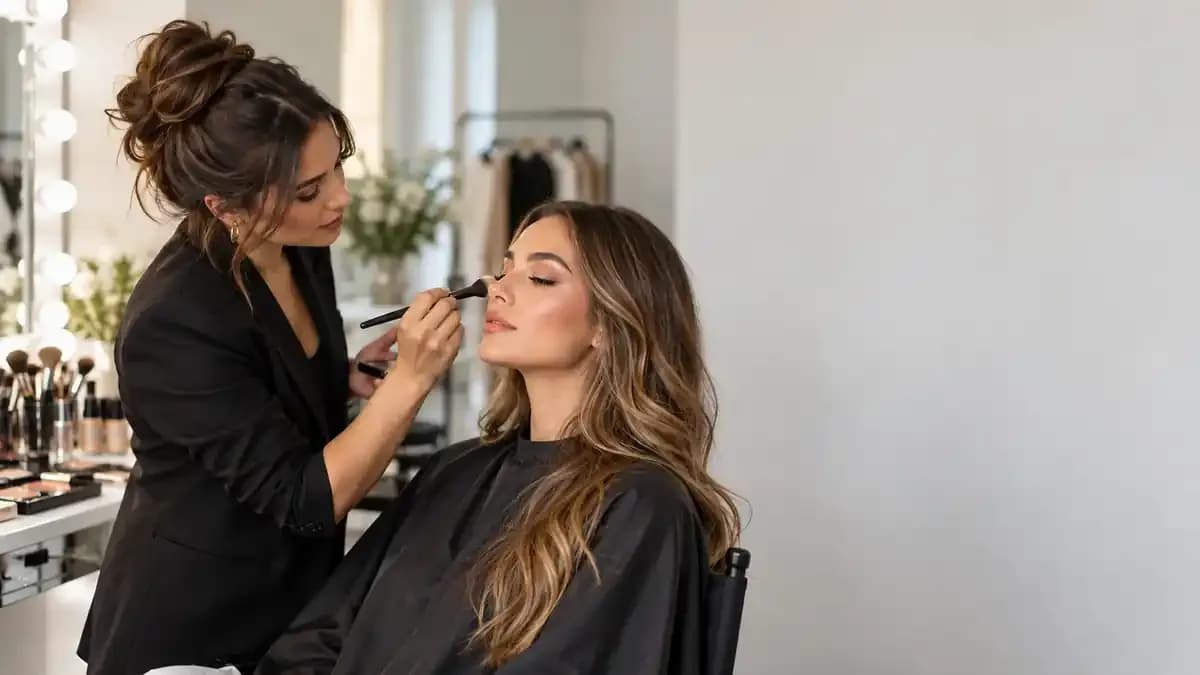
A make-up artist plans and applies make-up to change or improve how a person looks. You might do a bride's make-up for her wedding, help a shopper choose products at a cosmetics counter, or turn an actor into a character for a TV series. Some artists also make wounds, scars and ageing effects for film.
We found no law in South Africa that makes a make-up artist hold a personal licence or register with a professional body. In Johannesburg, any place where make-up is done for pay needs a salon permit. There is a national occupational certificate for make-up artists, and at least one private college offers a higher certificate in film and TV make-up. Some 2026 job adverts asked for a make-up certificate.
The work is creative and close to people, but it is not always glamorous. Counter jobs can come with sales targets and weekend shifts. Film and TV days can start before sunrise and run very long. Some artists freelance, so work can come and go.
A Day in the Life
This is a day on a South African TV or film set. Counter jobs in stores can come with sales targets and weekend shifts.
04:30
Very early start — On busy shoots your day can start around half past four in the morning. You get your kit, brushes and products ready before the first actors arrive.
05:00
First actors in the chair — Actors arrive in groups, according to their call times. You work through them one by one, turning each person into their character before filming starts.
Plan every character — The head of the make-up team reads the story ahead of time. If a character was hurt in an earlier scene, the wound must look like it is slowly healing.
Keep it the same in every scene — Scenes are filmed out of order. A make-up assistant photographs each character in each scene, so the look matches every time and nobody spots a mistake on screen.
Special effects take time — Scars, ageing and creature effects use materials such as latex and silicone. They need research and preparation, and can take hours to apply.
Touch-ups between takes — You stay near the set and follow the shooting schedule. Between takes you check each actor's make-up and fix it, so the look still matches.
If you work on a counter instead — You advise shoppers, do make-up looks, keep to hygiene standards, check stock and try to reach your monthly sales target. Some counter jobs ask for weekend shifts.
A long day ends — Film and TV days can last 12 to 16 hours. You clean your brushes and pack your kit, ready for the next call time.
Choose this career if…
- You are steady with your hands
- You genuinely like people
- You are fine working nights, weekends and public holidays
- You are careful with detail
- You push through when it gets hard
- You do not wait to be told
Salary
Council pay rates depend on where you work
The beauty bargaining council's 2026 wage schedules we found list a Make-up Artist grade for Cape Town, Wynberg, Simon's Town and Bellville; KwaZulu-Natal; Pretoria; and Bronkhorstspruit-Cullinan. Elsewhere, ask the council whether it covers your area and which grade applies. The national minimum wage is the legal floor for almost all employees.
Freelancers handle their own tax
If you freelance, SARS treats you as a provisional taxpayer, so you pay tax twice a year yourself. The Unemployment Insurance Fund (UIF) does not cover independent contractors, so you have no UIF safety net when work is slow.
HCSBC wage schedule, Division 113 (Annexure H11) from 1 March 2026, work code 3026 'Make-up Artist' (R8,450.45 a month), as at March 2026 — basic salary before allowances.HCSBC wage schedule, Division 112 (Annexure H10) from 1 March 2026, work code 3026 'Make-up Artist' (R7,373.47 a month), as at March 2026 — basic salary before allowances.HCSBC wage schedule, Division 109 (Annexure H9) from 1 March 2026, work code 3026 'Make-up Artist' (R6,386.79 a month), as at March 2026 — basic salary before allowances.HCSBC wage schedule, Division 106 (Annexure H6) from 1 March 2026, work code 3026 'Make-up Artist' (R8,450.46 a month), as at March 2026 — basic salary before allowances.National Minimum Wage, GN R.7083, Government Gazette 54075, 3 February 2026 (copy hosted by the HCSBC): R30,23 per ordinary hour from 1 March 2026, as at March 2026 — basic salary before allowances.
Mathematics or Maths Literacy?
Worth knowingGrade 10 and 11 · still reversible
You take Mathematics
- Mathematics keeps university options open; check with the provider that it is accepted for the Make-Up Consultant certificate.
- It helps with pricing, budgets and running your own make-up business.
You take Mathematical Literacy
- SAQA lists the entry for the Make-Up Consultant certificate as 'An NQF Level 3 qualification with Mathematical Literacy', so Maths Literacy fits that route.
- The full Make-up Artist certificate asks for an NQF Level 3 qualification and names no maths subject.
- The film and TV higher certificate we checked asks for a matric and English, and names no maths subject.
- Maths Literacy can close university degrees that ask for Mathematics.
Best School Subjects
Strongly recommended
- English · Home Language or First Additional Language. Colleges ask for it, and you advise clients and read scripts.
- Visual Arts · Builds colour, shape and drawing skills you use on every face.
- Dramatic Arts · Shows how stage and screen work, including character, lighting and performance.
Also useful
- Business Studies · Many artists freelance or run their own make-up business.
- Life Sciences · Helps you understand skin, allergies and hygiene.
- Design · Trains you to plan a look from a brief to a finished result.
Practical Requirements
Final external assessment (EISA) for the Make-up Artist certificateRequirement
Passing all knowledge, practical and work experience modules of the National Occupational Certificate: Make-up Artist. When you have passed every module, you sit one final external assessment, run by the Services SETA for the QCTO (the Quality Council for Trades and Occupations). SAQA says you must pass it to get the certificate.
Workplace experience modules inside the Make-up Artist certificate (36 credits)Internship
Enrolling for the National Occupational Certificate: Make-up Artist. It is part of earning the certificate, not a licence to work. Part of the Make-up Artist certificate happens in a real workplace. There are six work experience modules: day, evening and special-occasion make-up; media, theatre and film; fashion and photographic; face and body art; camouflage make-up; and promoting make-up products to clients.
Alternative careers
Related careers. Each has its own entry requirements — check every one separately.
Actor
Performs in front of the camera; make-up artists build the look behind it.
Nail Technician
Works on hands and feet, mostly in salons, with similar client service.
Hairdresser
Cuts and styles hair. On set, hair and make-up often share a department.
Beauty Therapist
Treats skin and body too; make-up is only one part of it.
Career Ladder
- Make-up Assistant or Trainee · No legal qualification requirement found
- Make-up Artist (counter, bridal or set) · National Occupational Certificate: Make-up Artist (NQF 4) or a make-up higher certificate (NQF 5), plus experience
- Senior Make-up Artist · Several years of experience
- Head of Hair and Make-up (film and TV) · Years on set, leading a make-up team
- Brand Educator or Training Manager · Make-up artist experience plus years of training others for a cosmetics brand
- Make-up Business Owner · Experience plus business skills
Where this can lead
Influencer
Some artists build an online audience with tutorials and brand deals.
Last reviewed October 2026. We work hard to keep this information accurate, but details can change — always verify before making a career decision. Tell us something is out of date.

