Career profile · Beauty & Personal Care
Beauty Therapist
Career summary
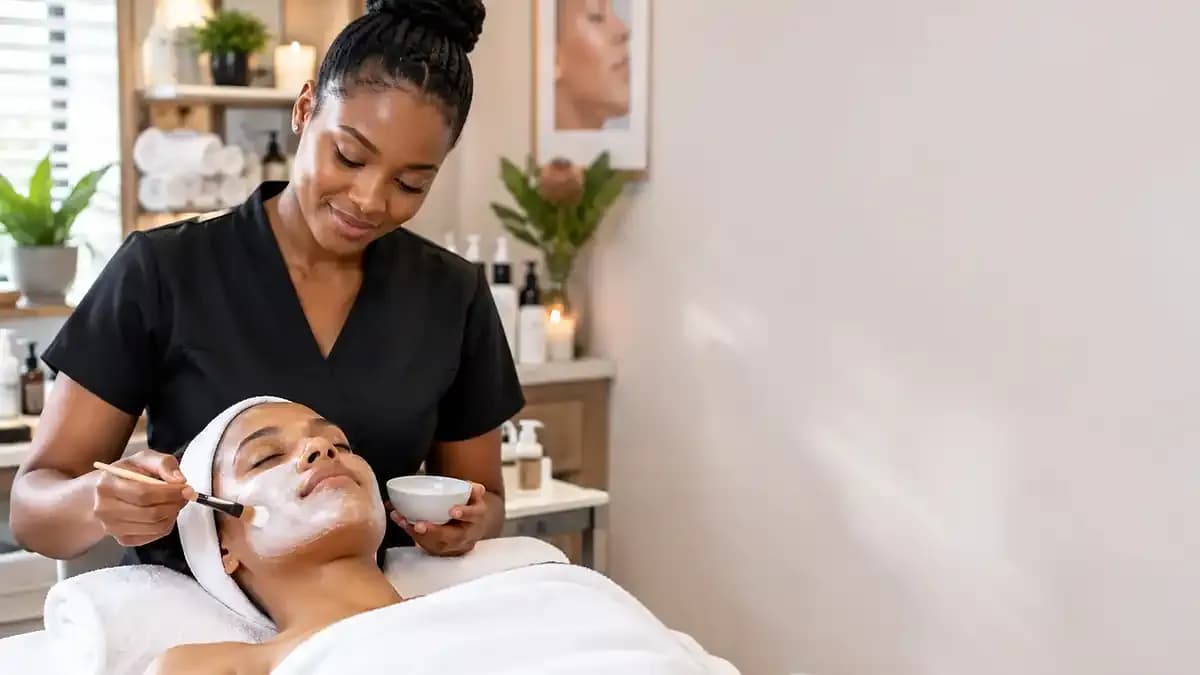
A beauty therapist looks after people's skin and body. You give facials, wax unwanted hair, tint lashes and brows, do make-up, manicures and pedicures, and give body massages and body treatments. Before each treatment you check whether it is safe for that client. Then you give advice on how to look after their skin at home.
In South Africa, beauty therapists work in mall salons, day spas, hotel spas, skin clinics, game lodges and on cruise ships. Many later open their own salon or home studio. We found no law that says you personally must register or hold a licence to work as a beauty therapist. But salon owners may have bargaining council rules, and using a powerful laser needs a licence.
This job is hands-on and physical. You are on your feet for most of the day, and malls trade late and over weekends. Pay is often a basic salary plus commission on treatments and products you sell. The reward is real: clients leave feeling better about themselves, and loyal clients can become your own business one day.
A Day in the Life
This is a typical day for a beauty therapist in a mall salon or day spa. Mall salons often open at 09:00 and close at 19:00 or later, and weekends are usually busy.
08:30
Set up the room — You clean and sterilise your tools, make up the treatment bed with fresh linen and switch on the wax heater. You check that you have enough products for the day's bookings.
09:00
Doors open — You look at the day's bookings and read each client's record card, so you know their skin type, past treatments and any allergies before they arrive.
09:15
Consultation first — A new client fills in a consultation form. You ask about skin conditions, medicine and allergies. Some health problems mean a treatment is not safe, so you change or refuse the treatment.
09:30
Facial — You cleanse, exfoliate, steam, massage and mask the client's face, choosing products for their skin type. The client is lying down and relaxing, so you work calmly and quietly.
11:00
Back-to-back waxing — Short bookings follow each other quickly: eyebrows, underarms, legs and bikini waxing. You must be quick, neat and gentle, and keep strict hygiene between clients.
13:00
Lashes, brows or nails — You tint and shape eyebrows, tint lashes, or do a manicure or pedicure. These treatments need steady hands and a good eye for detail.
14:30
Full-body massage — A one-hour body massage or body treatment, such as a scrub or wrap. This is the most physically tiring part of the day, using your arms, shoulders and back.
Advice and products — After each treatment you explain aftercare and suggest products to use at home. Many salons count product sales towards your commission and monthly targets.
Turn the room around — Between clients you clean surfaces, disinfect tools, change linen and update the client's record, often with only a few minutes to spare.
19:00
Close up — You finish the last booking, clean the room and restock. Weekends and public holidays are worked on a roster, and they are often the busiest days.
Choose this career if…
- You are steady with your hands
- You are fine on your feet all day
- You genuinely like people
- You are careful with detail
- You are fine working nights, weekends and public holidays
- You keep your cool when someone is rude to you
- You are not squeamish
Mathematics or Maths Literacy?
Worth knowingGrade 10 and 11 · still reversible
You take Mathematics
- Mathematics keeps more options open if you later change your mind and study a health degree.
- It is accepted for the Diploma in Somatology at the institutions we checked.
- It helps with pricing, stock control and running your own salon.
You take Mathematical Literacy
- SAQA lists the entry for the Beauty Therapist certificate as 'An NQF Level 3 qualification with Mathematical Literacy', so Maths Literacy does not close this route.
- Maths Literacy was accepted for the Diploma in Somatology at the institutions we checked, but some asked for a higher mark in Maths Literacy than in Mathematics.
- Maths Literacy can close university degrees that ask for Mathematics, such as many health science degrees.
Best School Subjects
Strongly recommended
- Life Sciences · Skin, anatomy and hygiene are central. Somatology diplomas we checked required it (one accepts Physical Sciences instead).
- English · Either Home Language or First Additional Language is accepted. You talk to clients and keep written records.
- Mathematical Literacy · The Beauty Therapist certificate asks for an NQF Level 3 qualification with Mathematical Literacy.
Also useful
- Physical Sciences · Helps with the cosmetic chemistry part of beauty training.
- Business Studies · Many therapists go on to run their own salon or studio.
- Consumer Studies · Helps with product knowledge, retail and serving customers.
Practical Requirements
Somatic clinical practice modules in the Diploma in Somatology (48 credits)Work-integrated learning
Enrolling for the Diploma in Somatology. It is part of the diploma, not a licence to work. The somatology diploma includes clinical practice, where you treat real clients in a training clinic or an approved practice. You must pass these modules to earn the diploma. How many hours you do, and where, depends on the institution.
One final external assessment (EISA) after all Beauty Therapist modules are passedRequirement
Passing all knowledge, practical and work experience modules of the National Occupational Certificate: Beauty Therapist. It is part of getting the certificate, not a licence to work. When you have passed every module, your training provider gives you a Statement of Results. That lets you sit one final external assessment, run by the Services SETA as the quality partner, under rules set by the QCTO (the Quality Council for Trades and Occupations). You must pass it to get the certificate.
Salon work experience modules inside the Beauty Therapist certificate (32 credits)Internship
Enrolling for the National Occupational Certificate: Beauty Therapist. It is part of earning the certificate, not a licence to work. Part of the Beauty Therapist certificate is done in a real workplace. There are seven work experience modules: skincare, manicure and pedicure, hair removal, make-up, lash and brow treatments, body massage and body treatments. Your training provider must record when you become competent in each one.
Laser machines need a licence
Under the Hazardous Substances Act, using a Class 3B or Class 4 laser needs a licence from SAHPRA, the health products regulator. A short laser course is not a licence.
Injections are not beauty therapy
Botox is a Schedule 4 medicine. Its official South African leaflet says only a suitably qualified and registered medical practitioner should give it. Under Health Professions Act rules, giving medicine is medical work, so doing it unregistered is a crime: a fine, up to 12 months in prison, or both. Do not inject clients, even if a course teaches it.
Look after your health at work
A study of salon workers in Polokwane found many reported skin irritation, breathing problems and headaches linked to salon products. Use gloves, good airflow and the safety steps you are taught.
Alternative careers
Related careers. Each has its own entry requirements — check every one separately.
Hairdresser
Hair instead of skin and body. A listed trade with its own qualification.
Nail Technician
Nails only. Nail care is one part of beauty therapy training.
Career Ladder
- Trainee or Junior Beauty Therapist · Studying towards the National Occupational Certificate: Beauty Therapist
- Beauty Therapist · National Occupational Certificate: Beauty Therapist (SAQA 121607) or an older equivalent · NQF 4
- Senior Beauty Therapist · A qualification plus several years of experience and strong retail skills
- Somatologist · Diploma in Somatology · NQF 6
- Salon or Spa Manager · Experience plus management and money skills
- Salon Owner, Trainer or Brand Educator · Years of experience and a loyal client base
Last reviewed October 2026. We work hard to keep this information accurate, but details can change — always verify before making a career decision. Tell us something is out of date.

