Career profile · Engineering
Civil Engineer
Career summary
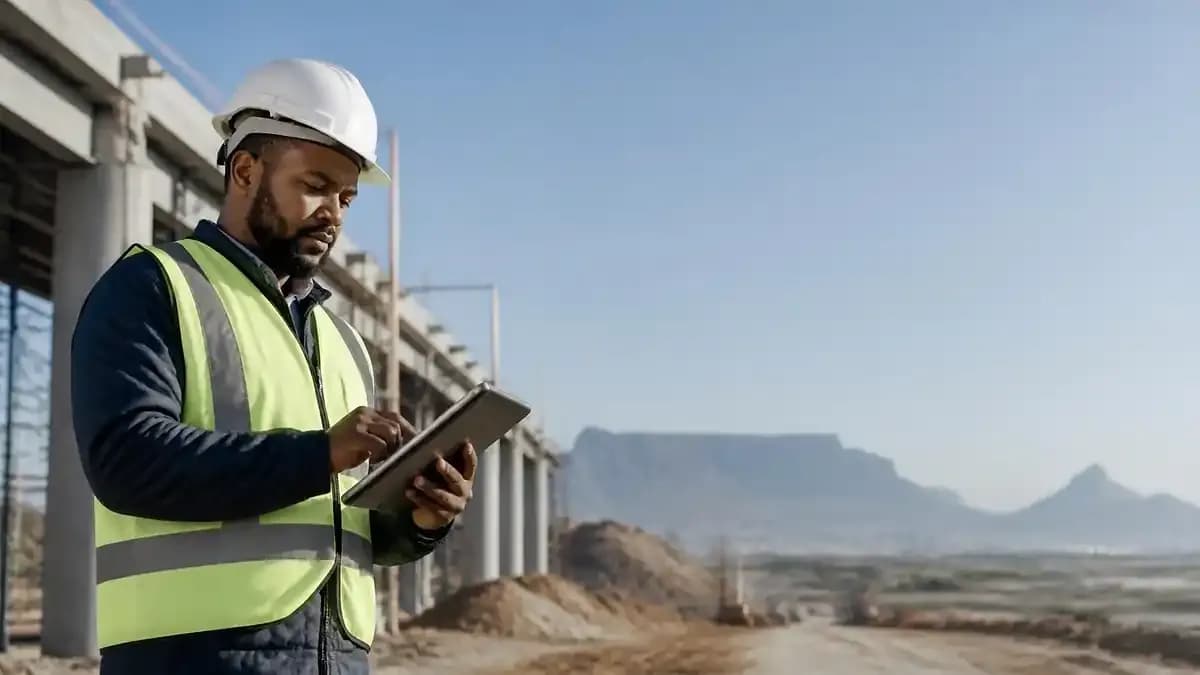
Civil engineers work out how to build the things a country needs: roads, bridges, dams, water and sewage pipes, railways and the frames of big buildings. They make sure these structures are safe, last a long time and are worth the money spent on them. Some spend most days at a desk designing. Others spend most days on a building site.
There are three levels in this field. A technician usually studies a three-year diploma, a technologist studies a three-year engineering technology degree, and an engineer studies a four-year engineering degree. All three can register with the Engineering Council of South Africa (ECSA), first as a candidate while they train, and later as a professional once they have proven their skills at work.
You can work for a consulting firm that designs projects, a construction company that builds them, or a government department or municipality that owns them and delivers services. The work is mostly Mathematics and Physical Sciences used in real life. It suits people who like solving problems, who can take responsibility, and who don't mind mud on their boots now and then.
A Day in the Life
This is a typical day for a young civil engineer at a consulting firm that designs and supervises a municipal water project. At a construction company, more of the day is spent on site.
07:30
Plan the day — Read emails from the client and the contractor. Check the drawings and the project programme, and decide which calculations and site visits must happen today.
08:30
Design work — Work on the design of a pipeline or pump station in design software such as AutoCAD or Civil 3D. Check sizes, levels and loads by hand so the numbers make sense.
11:00
Site inspection — Drive to site and inspect the work in progress. Check that the contractor is building what the drawings show, that test results are in order and that everyone follows the safety rules.
13:30
Site meeting — Meet the contractor and the client to talk about progress, delays and problems. Agree what must change, and write it down so there is a record.
15:00
Contracts and paperwork — Check the contractor's claims for payment, update the project programme and help prepare tender documents for the next project.
16:30
Time with your mentor — Go through your work with a senior registered engineer. Record what you did today, because these training records are part of your later application to register as a professional.
Mathematics or Maths Literacy?
Decide nowGrade 10 and 11 · still reversible
You take Mathematics
- With Mathematics and Physical Sciences, all three routes stay open: diploma, BEngTech degree and BEng degree.
- You can register with ECSA later as a technician, technologist or engineer.
- You can study further later, from a diploma up to degree level.
You take Mathematical Literacy
- The civil engineering diploma, BEngTech and BEng routes do not accept Maths Literacy.
- Bridging maths certificates for engineering at universities of technology also need Mathematics or Technical Mathematics.
- A longer route stays open: TVET college engineering courses that include Mathematics can later lead into some engineering diplomas.
Best School Subjects
Essential
- Mathematics · Every route needs Mathematics, or Technical Mathematics for some diplomas and BEngTech degrees. Maths Literacy is not accepted.
- Physical Sciences · Forces, materials and water flow are physics used every day.
- English · Engineers write reports and read contracts and specifications, so you need strong English.
Strongly recommended
- Engineering Graphics and Design · Teaches you to read and draw technical drawings.
Also useful
- Civil Technology · Introduces construction and civil services in the built environment.
- Technical Mathematics · Accepted instead of Mathematics for some diplomas and BEngTech degrees, not for every degree.
Professional Registration
This career is associated with the Engineering Council of South Africa (ECSA). Established under the Engineering Profession Act 46 of 2000 (s18 categories; s21 protected titles; s26 identified work; s41 offences).
ecsa.co.za— opens in a new tab · 1st Floor, Waterview Corner Building,, 2 Ernest Oppenheimer Avenue, Bruma Lake Office Park, Bruma, Johannesburg, 2198
You register in one of these categories:
- Candidate Engineer
- Candidate Engineering Technician
- Candidate Engineering Technologist
- Registered Lift Inspector
- Registered Lifting Machinery Inspector
Compulsory only for using protected titles (s18/s21) and for 'identified engineering work' under s26, not for the generic word 'engineer'. Annual renewal + CPD required to keep registration active (s22). No amount stated.
When you must be registered
You do not need to be registered to study. Under the Engineering Profession Act and ECSA's 2026 rules, identified civil engineering work must be done by a registered person (at least a candidate) or supervised by one who takes responsibility for it. Check with ECSA how this applies to your job. Titles such as Professional Engineer also need registration.
Career Ladder
- Candidate Engineering Technician · Diploma in Civil Engineering · NQF 6
- Professional Engineering Technician · Diploma plus supervised training · NQF 6
- Candidate Engineering Technologist · BEngTech in Civil Engineering · NQF 7
- Professional Engineering Technologist · BEngTech plus supervised training · NQF 7
- Candidate Engineer · BEng or BSc (Eng) in Civil Engineering · NQF 8
- Professional Engineer · BEng or BSc (Eng) plus supervised training · NQF 8
- Senior engineer, or your own consulting practice · Professional registration plus years of experience · NQF 8
Last reviewed October 2026. We work hard to keep this information accurate, but details can change — always verify before making a career decision. Tell us something is out of date.

