On this page · 12
- 1. Kruger is basically down the road
- 2. Weekends on the Panorama Route
- 3. Student life in Mbombela: hippos, not traffic jams
- 4. Big games and a proper arts festival
- 5. You'd be living next to some of the oldest rocks on Earth
- 6. Getting around Mbombela (and out of it)
- 7. Two borders and a lot of languages
- 8. Real industries for part-time work and internships
- 9. Two climates in one province
- The not-so-great bits
- Your study options in Mpumalanga
- What to do next
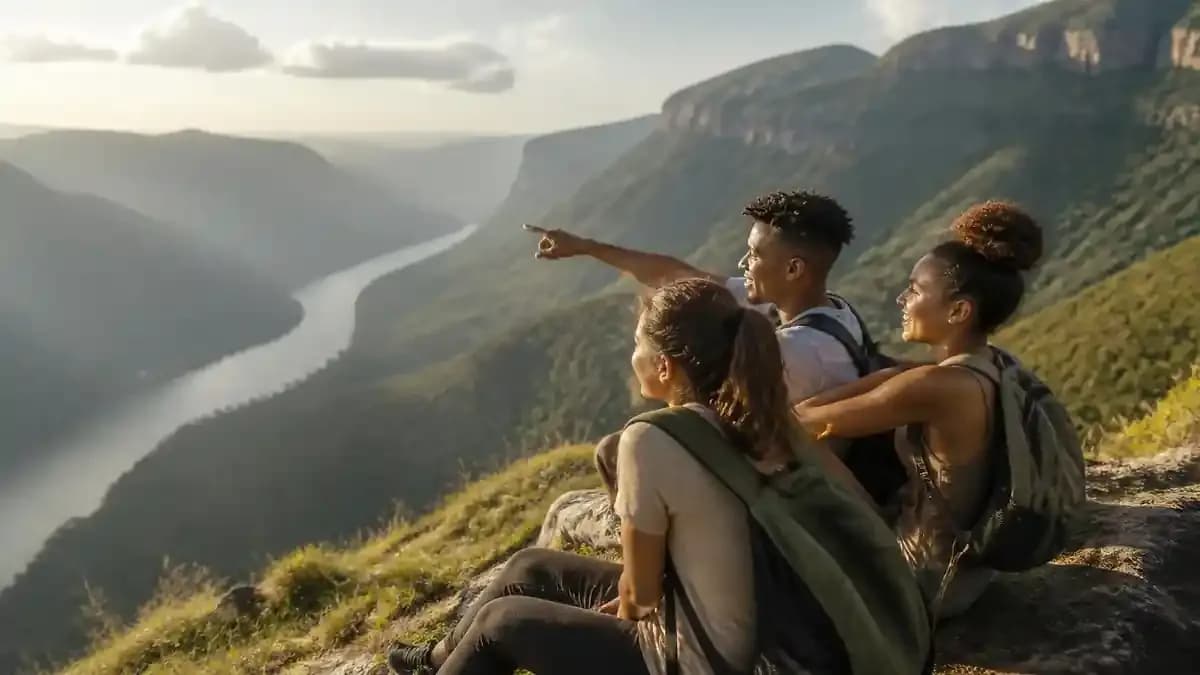
Most people only know Mpumalanga from the car window on the way to Kruger. Which is a pity, because if you study in Mpumalanga you get to live in the place everyone else drives hours to visit for a long weekend.
It's not Joburg. It's not Cape Town. It's smaller, greener, slower, and a lot closer to elephants. For the right person, that's the whole point.
Here's the honest version: what's genuinely good about studying in Mpumalanga, and what might drive you up the wall.
1. Kruger is basically down the road
This is the big one. Five of Kruger National Park's southern gates (Malelane, Crocodile Bridge, Numbi, Phabeni and Paul Kruger) are all reached via Mbombela.
So a Saturday game drive isn't a once-a-year family trip. It's a thing you and your mates can plan on a Thursday. If you're studying anything in conservation, tourism or hospitality, being this close to one of Africa's best-known parks also helps when you're hunting for practicals.
2. Weekends on the Panorama Route
The escarpment north of Mbombela is ridiculous. The Blyde River Canyon runs for about 33km and is described by SA Tourism as the largest "green canyon" in the world. At God's Window, the cliffs drop roughly 700m, and on a clear day you can see across Kruger to the Lebombo Mountains.
Close by are Bourke's Luck Potholes, the Three Rondavels, and a string of waterfalls on the R532 near Sabie: Lone Creek, Mac Mac, Lisbon and Berlin Falls, to name a few.
Into adrenaline? The Graskop Gorge Lift drops you 51 metres down a cliff face in a glass lift into indigenous forest. Graskop is also famous for its pancakes, which is important information after a long hike.
3. Student life in Mbombela: hippos, not traffic jams
Mbombela is the provincial capital, but it doesn't feel like a big city, and that's a good thing when you've got exams.
On the edge of town, the Lowveld National Botanical Garden covers 165 hectares where the Crocodile and Nels rivers meet. There's a rainforest trail to a lookout over the river gorge, the country's biggest cycad collection, and hippos living in the rivers. Cheap study break, sorted.
4. Big games and a proper arts festival
The Mbombela Stadium was built for the 2010 FIFA World Cup, and you'll spot it by its 18 roof supports shaped like giraffes. These days it's home to the Pumas in rugby's Currie Cup and TS Galaxy in the football Premiership, so live sport is a short trip away.
Every July, Mbombela also hosts Innibos, a national arts festival with music stages, food and craft stalls. Good excuse to take a weekend off.
5. You'd be living next to some of the oldest rocks on Earth
Near Barberton, the Barberton Makhonjwa Mountains became a UNESCO World Heritage Site in 2018. The rocks there are about 3.25 to 3.6 billion years old, and scientists use them to study how continents formed and where early life began.
If you're into geology, environmental science or just very old things, that's a special field-trip spot to have nearby.
6. Getting around Mbombela (and out of it)
Let's be real: Mpumalanga is a driving province. But you do have options.
- By road: The N4 toll route runs from Pretoria through eMalahleni and Mbombela all the way to Maputo. It's the spine of the province.
- By bus: Long-distance buses run between Joburg's Park Station and Mbombela, with operators like Citiliner, City to City, Translux and Intercity Xpress. Some even continue to Maputo.
- By taxi: Minibus taxis are how most people get between towns and townships day-to-day.
- By air: Kruger Mpumalanga International Airport sits about 27km by road from Mbombela, with flights to Joburg, Cape Town and Durban.
Going home for the holidays to Gauteng or Limpopo is very doable.
7. Two borders and a lot of languages
Mpumalanga borders both Eswatini and Mozambique. The Lebombo border post at Komatipoort is the main road crossing to Mozambique, and Oshoek near Ermelo is a well-used route into Eswatini. Maputo is closer than you'd expect.
Day-to-day, you'll hear a real mix. siSwati and isiZulu are the most spoken home languages, with Xitsonga and isiNdebele close behind, plus Afrikaans and English. Picking up a bit of siSwati is a lekker way to make friends fast.
8. Real industries for part-time work and internships
This isn't a province that runs only on tourism. Mpumalanga produces around 80% of South Africa's coal and is home to some of the biggest coal-fired power stations in the southern hemisphere, mostly up on the Highveld around eMalahleni and Middelburg.
Down in the Lowveld, Mbombela is the country's second-biggest citrus area. Add forestry around Sabie and Graskop, the paper mill at Ngodwana, plus lodges and tour companies around Kruger. If you're heading into engineering, agriculture, hospitality or a trade, there are real employers nearby to chase for vac work, apprenticeships and learnerships.
9. Two climates in one province
The Lowveld (Mbombela, Hazyview, Komatipoort) is subtropical: hot, humid summers with afternoon storms and mild winters. Perfect braai weather most of the year.
The Highveld (eMalahleni, Ermelo, Dullstroom) is another story. Dullstroom sits at about 2,100m, its August nights regularly dip below freezing, and it's one of SA's best-known fly-fishing towns for trout. Pack a proper jacket if you're studying up there.
The not-so-great bits
- Fewer places to study. There's a much shorter list of options than in Gauteng or the Western Cape. Check your exact course is offered here before you fall in love with the place.
- Smaller city energy. Mbombela is a regional city, not a metro. Nightlife, big concerts and niche hobbies are thinner on the ground.
- You'll want wheels. Public transport between towns is mostly minibus taxis and long-distance buses. Getting to Kruger or the Panorama Route without a car (or a friend with one) is hard.
- Highveld air quality. The government declared the Highveld Priority Area an air-pollution hotspot back in 2007, and in 2022 the Pretoria High Court ruled the air there violated residents' constitutional rights. If you have asthma, this matters when choosing between eMalahleni and Mbombela.
- Summer heat and humidity in the Lowveld can be a lot if you're used to Highveld weather.
Your study options in Mpumalanga
You've got more routes than you might think: universities and universities of technology, TVET colleges for hands-on, job-ready courses, private colleges, nursing colleges, plus short courses and learnerships linked to local industries. You can also study through distance learning from any town in the province. See everything on our Mpumalanga page, or jump straight to universities, TVET colleges, private colleges or nursing colleges. If you pick a private college, make sure it's registered with the Department of Higher Education and Training (DHET). You can check that on our listings.
Comparing with next door? Read top reasons to study in Limpopo or top reasons to study in Gauteng.
What to do next
- Pick a direction first. Browse careers to see what you'd actually enjoy doing.
- Check who offers it. Search institutions or the Mpumalanga page for courses that fit.
- Sort out the money. Read up on NSFAS, bursaries and loans on our funding page.
- Still deciding on a province? Our guide on why study in South Africa helps you compare.
Related Articles

- Where to study

- Where to study

- Where to study

