On this page · 14
- What Is Home Schooling in South Africa?
- Is Home Schooling Legal in South Africa?
- Home Schooling Requirements Under the DBE
- How to Register for Home Schooling in South Africa (Step-by-Step)
- Choosing an Accredited Home Schooling Curriculum
- How Home-Schooled Learners Write Matric in South Africa
- Pros and Cons of Home Schooling
- How Much Does Home Schooling Cost in South Africa?
- Home Schooling vs Traditional School vs Online School
- Common Mistakes Parents Make When They Start Home Schooling
- Insider Tips From Experienced Home-Schooling Parents
- What Happens After Matric? Universities, TVET Colleges and Funding
- Frequently Asked Questions
- Final Thoughts: Is Home Schooling Right for Your Family?
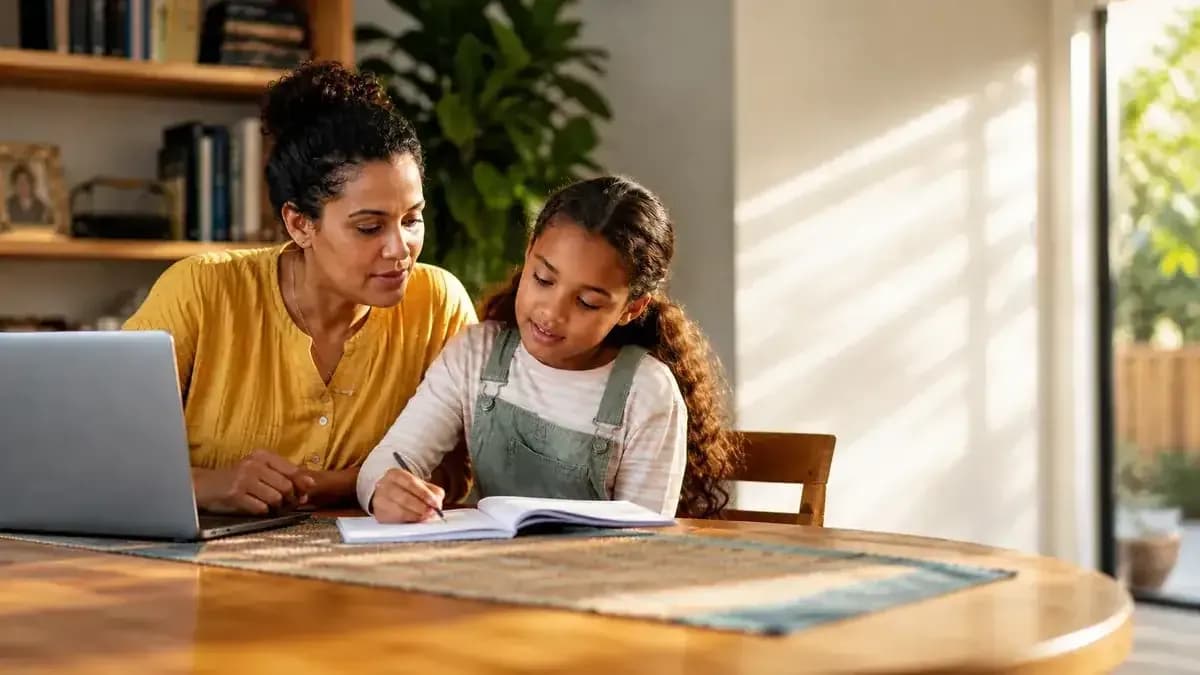
Home schooling in South Africa has moved from the fringe into the mainstream. Whether it follows pandemic-era remote learning, safety concerns at a local school, a child who needs a slower or faster pace, or a family that simply wants more say in what and how their children learn, thousands of South African parents now teach their children at home instead of sending them to a traditional classroom.
But home schooling here is not a free-for-all. South African law treats it as a legal, regulated form of education, not an escape hatch from schooling altogether. Parents who want to home school need to understand the rules under the South African Schools Act (SASA), know how to register with their Provincial Department of Education, choose a curriculum that actually leads to a recognised qualification, and plan how their child will eventually write matric.
This guide walks you through all of it: the legal requirements, the registration process step by step, the curricula and service providers South African families actually use, the matric options open to home-schooled learners, realistic costs, and the pros and cons worth weighing before you start. By the end, you'll know exactly what to do next, and which mistakes to avoid along the way.
What Is Home Schooling in South Africa?
Home schooling, also called home education, is when a parent or guardian takes full responsibility for a child's education outside a registered school, usually at home. It differs from an online school or virtual academy, where a registered institution still designs the curriculum, sets the timetable and issues report cards. With true home schooling, the parent chooses the curriculum, the schedule and the teaching method, even if they buy in materials or outsource particular subjects.
In South Africa, home schooling sits alongside three other main options for primary and secondary education: public (government) schools, independent (private) schools, and online or distance-learning schools. Many home-schooling families blend elements of the last one, using an online curriculum provider for structure while still teaching from home.
Is Home Schooling Legal in South Africa?
Yes. Home schooling is a legally recognised education option in South Africa, not a grey area or a loophole.
The South African Schools Act (SASA)
Home education has been legally recognised since the South African Schools Act 84 of 1996 (SASA) came into effect. Section 51 of SASA allows a parent to educate a child at home instead of enrolling them in an ordinary school, provided the education meets certain standards and the child is registered with the Head of Department in the relevant province.
In practice, this means home schooling follows its own legal process, much like registering a child at a public or private school, rather than sitting outside the schooling system altogether.
What the BELA Act Changed in 2024
The Basic Education Laws Amendment (BELA) Act, signed into law in September 2024, updated several sections of SASA, including provisions that touch home education. According to legal commentary and homeschooling organisations that tracked the legislation, BELA did not remove parents' right to home school; it tightened the administrative side of it. Changes parents should be aware of include:
- Grade R is being phased in as part of compulsory schooling, which affects the age from which a child must be registered for education, including home education.
- Provincial Education Departments are expected to process and respond to home education applications within a defined period.
- Curriculum content used at home should align with CAPS (the Curriculum and Assessment Policy Statement) or another approved standard, and learners may need to undergo assessment at key phases.
Regulations under BELA are still being refined at provincial level, so always check current guidance on the Department of Basic Education's website (education.gov.za) or with your Provincial Education Department before you register, rather than relying only on second-hand summaries, including this one.
Home Schooling Requirements Under the DBE
Who Must Register
If your child is of compulsory school-going age and you intend to teach them at home rather than enrol them in a registered school, the law requires you to apply to register them for home education with your Provincial Department of Education. This applies whether you plan to follow a CAPS-aligned programme, an international curriculum, or a curriculum you design yourself.
What You'll Typically Need Before You Apply
- A certified copy of the child's birth certificate
- A certified copy of the parent or guardian's ID
- Proof of residential address
- A brief outline of the curriculum you plan to follow
- A proposed weekly timetable or study plan
- A short motivation letter explaining your choice of home education
- Proof of deregistration from a previous school, if applicable
Exact document requirements differ slightly from province to province, so download the current application form from your Provincial Department of Education or the national Department of Basic Education's home education page before you start.
How to Register for Home Schooling in South Africa (Step-by-Step)
Registration is provincial, so the exact contact details differ depending on where you live, but the overall process follows the same pattern nationally.
Get the correct provincial form.
Home education is administered provincially, so download the application form for your specific province (for example, Western Cape, Gauteng or KwaZulu-Natal) from the Department of Basic Education's website or your provincial education department's office.
Gather your documents.
Certify copies of ID documents and birth certificates, and prepare your curriculum outline, timetable and motivation letter.
Complete the application form.
Fill in every section, including your chosen curriculum and how you intend to assess your child's progress.
Submit to your Provincial Home Education Coordinator.
Applications are typically sent by email to a designated home education official or coordinator in your province.
Confirm receipt and follow up.
Provincial systems can be slow to respond; request confirmation that your documents were received and keep a record of all correspondence.
Respond to verification requests.
A provincial official may contact you to verify your details or ask follow-up questions about your plan.
Receive your registration outcome.
Once approved, you'll receive a registration letter or certificate with a registration number. Keep this safe, as you may need it later for matric exam entry or when applying to a school or tertiary institution.
Insider Tip
Start this process well before the school year begins. Provincial departments can take weeks or months to process applications, and teaching a child who is not yet registered can create complications later, particularly around matric exam entry.
Choosing an Accredited Home Schooling Curriculum
Your choice of curriculum determines what qualification your child ends up with, so it's worth researching properly before you commit.
CAPS-Aligned Curricula
Most South African home-schooling families choose a curriculum aligned with CAPS, the same curriculum used in public schools, because it leads directly to the National Senior Certificate (NSC), South Africa's standard matric qualification, and is automatically recognised for university and TVET college admission. Providers offering CAPS-aligned home-schooling packages include Impaq (part of the Optimi group), among others, typically supplying workbooks, online lessons and assessment support.
Cambridge and Other International Curricula
Some families choose the Cambridge curriculum (IGCSE and AS/A-Levels) or, less commonly, an American home-school diploma or GED pathway. These can open doors to international universities, and with a Universities South Africa (USAf) evaluation certificate, can also be used to apply to South African universities. CambriLearn is one South African provider offering Cambridge-based home-schooling programmes online.
Online Schools That Support Home Education
A growing number of South African online schools, such as Koa Academy and Think Digital Academy, blend structured, curriculum-backed online schooling with the flexibility of learning from home. These are not identical to pure home schooling, since the institution sets more of the structure, but they're a popular middle ground for parents who want support without giving up home-based learning entirely.
Whichever curriculum you choose, check that it is either CAPS-compliant or leads to a recognised qualification, and confirm how the provider supports your child's eventual matric exams before you commit.
How Home-Schooled Learners Write Matric in South Africa
Home schooling doesn't mean opting out of matric. It means choosing which route your child will take to get there.
Department (NSC) Exams as a Private Candidate
Home-schooled learners can write the same National Senior Certificate (NSC) exams as public school learners by registering as private, or independent, candidates through their Provincial Department of Education, generally from Grade 11 or Grade 12. This route follows the CAPS curriculum and the DBE's examination timetable.
SACAI (South African Comprehensive Assessment Institute)
SACAI is accredited by Umalusi, South Africa's quality council for general and further education, to assess the NSC. Home-schooled learners don't register with SACAI directly. Instead, they enrol through a SACAI-registered distance education provider or independent school, which manages their subject-based assessment and prepares them for SACAI's NSC exams.
IEB (Independent Examinations Board)
The IEB offers the National Senior Certificate through its own examination and quality-assurance system, generally regarded as academically rigorous. Learners typically need to be enrolled at an IEB-registered school or distance-learning centre to write IEB exams; the board points families toward registered institutions rather than direct individual entry, so confirm the current process with the IEB (ieb.co.za) if you're considering this route.
International Alternatives
Some home-schooling families skip the NSC altogether and pursue Cambridge International A-Levels, an American high school diploma, GED, or the International Baccalaureate. These can suit learners heading to study abroad, but if your child wants to study at a South African public university, you'll usually need a Certificate of Evaluation from Universities South Africa (USAf) confirming the qualification is equivalent to the NSC.
| Matric Route | Managed By | Best Suited To |
|---|---|---|
| NSC (Department) | DBE / Umalusi | CAPS-curriculum families wanting the standard SA matric |
| SACAI | Umalusi, via a registered provider | Learners enrolled with a SACAI-registered distance provider |
| IEB | IEB / Umalusi | Learners enrolled with an IEB-registered school or centre |
| International (Cambridge etc.) | Cambridge Assessment / other boards | Families planning study abroad, plus a USAf certificate for SA university entry |
Pros and Cons of Home Schooling
Home schooling suits some families far better than others. Here's a balanced look at what you're weighing up.
Pros
- Flexible pace tailored to your child's learning style
- More one-on-one attention than a class of 30+ learners
- Freedom to travel or relocate without disrupting schooling
- Can sidestep safety, bullying or overcrowding concerns at some schools
- Curriculum can flex around a child's strengths, e.g. sport or the arts
- Many families report a stronger parent-child relationship through shared learning
Cons
- Requires significant time, patience and organisation from a parent
- Registration and admin can be slow or applied inconsistently between provinces
- Socialisation must be actively planned, not left to chance
- Can become costly once curriculum, tutors and exam fees are added up
- Fewer built-in extracurriculars, facilities and school-based social milestones
- Parents must research the matric pathway carefully to avoid gaps
How Much Does Home Schooling Cost in South Africa?
Costs vary enormously depending on the curriculum, how much support you buy in, and whether you use an all-in-one online school or assemble your own materials. As a general guide:
- DIY / budget approach: parent-designed curriculum using free or low-cost resources can cost only a few thousand rand a year, mostly for books, stationery and exam entry fees.
- Structured curriculum packages: CAPS-aligned providers such as Impaq, or Cambridge-based providers such as CambriLearn, typically range from several thousand to tens of thousands of rand a year, depending on the grade and subject load.
- Full online schools with live classes and teacher support: fees can approach, and in some cases exceed, those charged by mid-range private schools.
On top of curriculum costs, budget for exam registration fees (NSC, SACAI, IEB or Cambridge), any tutoring for subjects you can't teach yourself, and materials such as textbooks, science kits or online subscriptions.
Because pricing changes yearly and varies by provider and grade, always request an up-to-date quote directly from your chosen curriculum provider rather than relying on averages found online, including the ranges above.
Home Schooling vs Traditional School vs Online School
| Factor | Home Schooling | Public School | Online School |
|---|---|---|---|
| Who sets the curriculum | Parent (or provider they choose) | DBE / provincial department | Registered online institution |
| Who teaches | Parent, tutors or a mix | Qualified classroom teachers | Qualified online teachers |
| Flexibility | Very high | Low | Medium to high |
| Typical cost | Wide range, budget to premium | Low fees, sometimes no fees | Medium to high |
| Social structure | Must be actively arranged | Built in | Requires some effort, often has online communities |
| Matric pathway | NSC (private candidate), SACAI, IEB or international | NSC via the DBE | NSC or IEB, depending on the provider |
Common Mistakes Parents Make When They Start Home Schooling
- Not registering with the Provincial Department of Education before starting, which can create legal and administrative problems later.
- Choosing a curriculum without checking whether it leads to a recognised matric qualification.
- Underestimating the time commitment, especially in the FET phase (Grades 10 to 12).
- Leaving matric exam entry too late; SACAI, IEB and DBE registration deadlines often fall early in the year.
- Isolating the child socially instead of proactively joining homeschool groups, sport clubs or co-ops.
- Not keeping records of assessments and portfolios, which some providers and provinces require for verification.
Insider Tips From Experienced Home-Schooling Parents
- Join a home-schooling support network, such as SA Homeschoolers or a provincial parent group, early. Experienced parents are usually the best source of practical, current guidance.
- Keep a portfolio of your child's work, tests and projects from the start. It helps with provincial verification and later with college or university applications.
- Build structured social activities into the week deliberately, through sport clubs, church youth groups, co-op classes or community volunteering, rather than assuming socialisation will happen on its own.
- Decide on your matric route (DBE, SACAI, IEB or international) by Grade 9 or 10 at the latest, since subject choices and registration deadlines depend on it.
- Consider connecting with an advocacy organisation such as the Pestalozzi Trust, which focuses on the rights of home-educating families in South Africa, for extra support navigating provincial registration.
What Happens After Matric? Universities, TVET Colleges and Funding
A home-schooled matric certificate from the NSC (DBE), SACAI or IEB is treated the same as any other matric certificate when applying to South African universities and TVET colleges. Admission depends on your child's subjects and marks meeting each institution's specific requirements, not on how they were taught.
If your child followed an international curriculum such as Cambridge or an American diploma, they will generally need a Certificate of Evaluation from Universities South Africa (USAf) confirming the qualification is equivalent to the NSC before applying to a South African university.
For funding, home-schooled matriculants apply the same way any other applicant does, including through NSFAS (the National Student Financial Aid Scheme) for university and TVET college study, or through SETA-funded learnerships once qualifications are recognised on the National Qualifications Framework (NQF), which SAQA (the South African Qualifications Authority) regulates. The Department of Higher Education and Training (DHET) oversees universities, TVET colleges and SETAs nationally, and its website is a useful reference point once your child is ready to apply for further study.
Explore Your Next Step Home schooling is just one part of the bigger education picture. Once your child is ready for what comes next, explore ThinkEducation.co.za to compare universities, TVET colleges and private institutions, find accredited courses, and search funding and bursary options, all in one place. Find It. Fund It. Study It. |
|---|
Frequently Asked Questions
Is home schooling legal in South Africa?
Yes. Home schooling is legally recognised under Section 51 of the South African Schools Act (SASA), provided the child is registered with the Provincial Department of Education.
Do I need a teaching qualification to home school my child in South Africa?
No formal teaching qualification is required by law. However, you do need to register your child and follow a curriculum that meets recognised standards, such as CAPS or an approved alternative.
How do I register for home schooling in South Africa?
You apply to your Provincial Department of Education using the home education application form for your province, submitting documents such as ID copies, a curriculum outline and a proposed timetable. See the step-by-step process above for full details.
What curriculum can I use for home schooling in South Africa?
Common options include CAPS-aligned curricula (through providers such as Impaq), Cambridge International curricula (through providers such as CambriLearn), or a curriculum designed by the parent, as long as it meets registration standards and, ideally, leads to a recognised qualification.
Can home-schooled learners write matric in South Africa?
Yes. Home-schooled learners can write the National Senior Certificate (NSC) as private candidates through the Department of Basic Education, through SACAI via a registered distance education provider, or through the IEB via an IEB-registered school or centre. Some families choose international alternatives such as Cambridge A-Levels instead.
Is home schooling free in South Africa?
No. A DIY approach using free or low-cost resources is the cheapest option, but most families budget for curriculum materials, exam fees and sometimes tutoring. Costs vary widely depending on the curriculum and level of support chosen.
Can a home-schooled child get into a South African university?
Yes. A recognised matric certificate, whether through the NSC, SACAI or IEB, is treated the same as any other matric for university and TVET college admission. Learners with international qualifications typically need a Certificate of Evaluation from Universities South Africa (USAf).
What happens if I don't register my child for home schooling?
Registration is a legal requirement under SASA. Not registering can create administrative complications later, including difficulty entering your child for matric exams or proving their educational history, and may expose parents to compliance action from the provincial department.
How long does home schooling registration take in South Africa?
Processing times vary by province and can take several weeks to a few months, so it's best to apply well before you plan to start, and to follow up regularly with your Provincial Home Education Coordinator.
Can I switch my child from home schooling back to a mainstream school?
Yes. Parents can enrol a home-schooled child in a public or private school at any point, subject to the receiving school's admission requirements and space availability. Keeping a portfolio of your child's work and assessments makes this transition easier.
What is the difference between home schooling and online schooling in South Africa?
With home schooling, the parent takes primary responsibility for teaching and choosing the curriculum. With online schooling, a registered institution designs the curriculum, timetable and assessments, and the child learns from home using that structure. It's a more guided version of learning outside a physical classroom.
Does the BELA Act ban home schooling in South Africa?
No. The Basic Education Laws Amendment (BELA) Act, signed in 2024, updated the administrative and curriculum-alignment requirements around home education but did not remove parents' legal right to home school under SASA.
Final Thoughts: Is Home Schooling Right for Your Family?
Home schooling in South Africa isn't a shortcut around the education system. It's a different route through it, with its own rules, paperwork and responsibilities. Done well, it can give a child a flexible, personalised education that still leads to a recognised matric and a clear path to university, TVET college or the workplace. Done without proper registration or planning, it can create avoidable stress for both parent and child.
If you're considering home schooling, start with the legal basics: register with your Provincial Department of Education, choose a curriculum that leads somewhere, and plan your child's matric route early. From there, the flexibility that draws so many South African families to home schooling can genuinely pay off.
Explore more on ThinkEducation.co.za: compare accredited institutions, browse funding and bursary options, or find the right course for your child's next step. Find It. Fund It. Study It.

